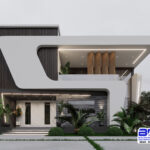
This is not an uncommon story in Nigeria. You have done your research. You have a budget. You have spoken to a contractor, gotten a rough figure, and mentally prepared yourself for the journey ahead. Then, three months into the build, the money is running thin and the house is nowhere near finished.
It is practically a rite of passage for first-time builders. And in most cases, it is not because the person was careless or uninformed. It is because there is an entire category of construction costs that nobody puts in their estimate, not the contractor, not the articles online, and certainly not the agent who sold you the land.
These are the hidden costs. And in Nigeria, they can inflate your total project budget by 30% or more if you do not see them coming.
Here are 10 Hidden Costs (Problems) that kill Construction in Nigeria.
1. Omo-Onile and Community Levies
Before a single block is laid on your site in many parts of Lagos, particularly the mainland, emerging estates, and peripheral areas, you will receive visitors. They come representing the original landowners, the community youth association, or various other groups with informal but very real authority over what happens in that neighbourhood.
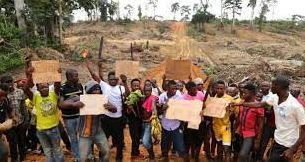
The fees they demand go by different names: Owo Ile, Omo-Onile fees, development levies, community dues. The amounts vary widely depending on the area and how the conversation goes, but budget between ₦200,000 and ₦1,000,000 or more across the life of your project. Some builders encounter multiple rounds of these demands at different stages when clearing begins, when foundation is dug, when roofing starts.
There is no official receipt. There is no fixed rate. But refusing to engage often means work stoppages, missing materials, or worse. It is one of the hidden things that experienced contractors know to plan for quietly.
2. Building Plan Approval and Government Permits
Your architectural drawings are not optional decoration. Before construction begins, you are legally required to obtain a building permit from the relevant authority LASBCA or LASPPPA in Lagos, with equivalent bodies in other states. This process involves submitting your architectural and structural drawings, paying approval fees, and waiting for sign-off.
The cost of getting professionally prepared drawings plus approval can run between 5% and 10% of your total project budget. On a ₦50 million build, that is ₦2.5 million to ₦5 million most people never factored in. Skip this step and you risk building in violation which can result in a stop-work order, demolition, or serious legal complications down the line.
3. Soil Testing
Your land looks solid. You have walked on it, driven on it, and it feels fine. But what sits beneath the surface is what your foundation will rest on for the next hundred years and you cannot see that with your eyes.
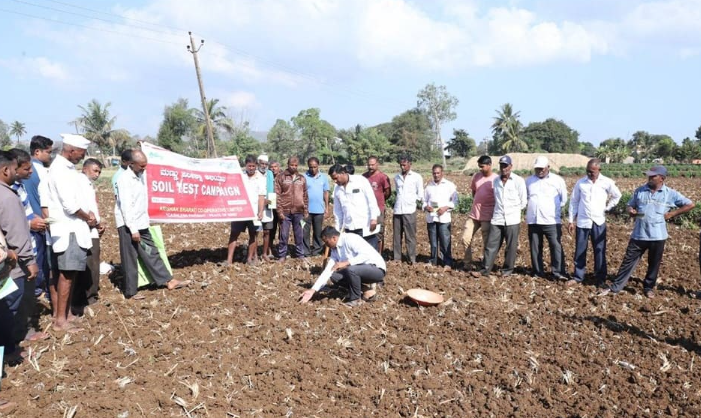
Soil testing before construction costs between ₦150,000 and ₦300,000 depending on the lab and number of samples taken. What it tells you is whether your ground requires a strip foundation, raft foundation, or in the case of waterlogged or particularly soft terrain pile foundation. The difference in foundation cost between a strip and a pile foundation alone can be several million naira. A soil test is the cheapest insurance you will ever buy on a construction project.
4. Professional Fees
Many Nigerians try to cut costs by skipping or underpaying professionals. It almost always costs more in the long run.
A properly managed build requires at minimum an architect, a structural engineer, and a quantity surveyor. The architect handles your design and plan approvals. The structural engineer ensures your building can actually carry the loads placed on it especially critical for anything above a bungalow. The quantity surveyor prepares your Bill of Quantities (BOQ), which is a detailed list of every material and unit of labour required, with current market pricing. A good BOQ alone can save you millions by eliminating guesswork and preventing contractor padding.
Combined, professional fees typically add 3% to 10% of your total project cost. On a ₦50 million project, budget at least ₦2 million to ₦5 million for this category.
5. Material Price Volatility Mid-Project
You priced cement at ₦9,500 per bag when you started. Four months later it is ₦13,000. This is not a hypothetical. It is what happened to builders across Nigeria between late 2024 and early 2026. Iron rods, roofing sheets, tiles, PVC pipes, all of them have seen significant price jumps in recent years with little warning.
When you budget for a project that will take 12 months or more to complete, you cannot assume the prices you researched today will hold. Budget a materials escalation buffer of at least 15% on top of your materials cost. This is separate from your general contingency fund. It is specifically for the price increases the market will throw at you between the day you start and the day you finish.
6. Security During Construction
An active building site with no overnight presence is an invitation. Bags of cement disappear. Copper wiring is stripped and sold. Roofing sheets vanish. These are not rare occurrences, they are common enough that experienced contractors price site security as a standard line item.
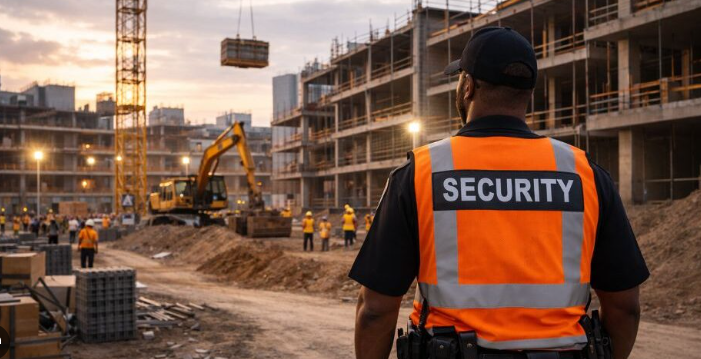
Hiring a full-time site watchman or guard service for the duration of your build will cost between ₦500,000 and ₦1,200,000 depending on how long construction runs. This is not a luxury. It is protection for an investment of tens of millions of naira sitting exposed on an open plot.
7. Utilities and Infrastructure
Your finished house still needs to function. And in Nigeria, a house is not truly liveable without infrastructure that in other countries comes standard from the government. Here, you build it yourself:
A borehole and pumping system will cost between ₦800,000 and ₦2,500,000 depending on depth and equipment. A septic tank is typically ₦500,000 to ₦1,500,000. Perimeter fencing and a gate, depending on length and material, runs anywhere from ₦2,000,000 to ₦6,000,000 or more. An overhead water tank, external security lighting, and a dedicated electricity connection or transformer contribution can add several hundred thousand more.
None of these appear in a standard contractor’s quote for the building itself. But you cannot hand over keys to a house with no water, no sewage, and no fence.
8. Generator and Fuel for Site Work
PHCN will not reliably power your site. Concrete mixers, power tools, vibrators for concrete compaction, and site lighting all require electricity throughout the build. Generator hire or the fuel costs for running one through the project duration adds between ₦300,000 and ₦600,000 to your total, depending on how long work runs and how frequently power is needed.
9. Material Wastage
Even with the best planning, materials are broken, spilled, measured incorrectly, or stolen in small amounts throughout a project. This is a known constant of construction everywhere in the world, and Nigeria is no exception.
Add a 10% to 15% wastage buffer on top of every material quantity your contractor estimates. If they say you need 500 bags of cement, budget for 550 to 575. This is not pessimism; it is how professional quantity surveyors work.
10. Your Contingency Fund: The Most Important Line in Your Budget
Everything above is still predictable to some degree. The contingency fund is for everything else, the unexpected structural issue discovered mid-foundation, the design change you will inevitably want once walls start going up, the price spike that hits during roofing, the contractor delay that extends your labour costs.
Set aside a minimum of 15% to 20% of your total project budget as a contingency, completely separate from your main budget, and not to be touched except for genuine surprises. On a ₦50 million project, that is ₦7.5 to ₦10 million sitting as your safety net.
If you finish the project and never need it, you have bonus money. If you need it halfway through, it is the difference between completing your home and watching a half-built structure decay in the rain.
The Builder Who Finishes Is Not the Richest One
The people who successfully complete their homes in Nigeria are not always those with the biggest budgets. They are the ones who planned honestly who accounted for the things nobody likes to talk about, built in room for the market’s unpredictability, and went into their project with eyes open.
Hidden costs are only hidden until someone tells you about them. Now you know.
If you want a professionally prepared Bill of Quantities that accounts for all of these materials, labour, permits, contingency, and site-specific factors.
Our team at Bullionrise Consult can build one for you before you spend a single naira on construction. Reach out today.